Boat Hull Repair Long Beach, CA
Boat hull repair in Long Beach, CA is best handled quickly — a small crack or blister left untreated can let water into the laminate and turn a minor fix into a costly rebuild. A mobile boat mechanic can come to your slip, mooring, or driveway and assess the damage on the spot, saving you haul-out fees and trailer hassle. Most fiberglass hull repairs, osmotic blister treatment, and gelcoat restoration can be completed right where your boat sits. Learn more about Boat Repair.

What Boat Hull Repair Actually Covers
Hull repair is not a single job — it ranges from a quick gelcoat touch-up on a stress crack to full fiberglass laminate replacement after a collision or severe osmotic blistering. In Long Beach's saltwater environment, hulls face UV degradation, electrolysis, and constant moisture exposure that accelerate wear. A proper repair starts with a thorough inspection to find every area of delamination, soft spots, or water intrusion before any grinding or filling begins. Skipping that step is the most common reason a hull repair fails within a season.
Common Hull Problems Found on Long Beach Boats
Saltwater mooring and the Southern California sun are a tough combination. Gelcoat fades and becomes porous, stress cracks form around hardware and fittings, and the repeated thermal expansion of fiberglass eventually opens seams. Boats kept in the water year-round — common at Alamitos Bay and the Long Beach marina — are especially prone to osmotic blistering, where water vapor passes through the gelcoat and gets trapped in the laminate, forming bubbles that weaken the hull over time.
Impact damage is the other frequent culprit. Dock strikes, submerged debris, and trailer mishaps can crack or puncture the hull skin. Even a small impact crack needs to be opened, dried, and properly laminated before it is faired and painted — simply filling it with gelcoat paste is a cosmetic fix that will fail.
- Stress cracks around cleats, stanchion bases, and through-hulls
- Osmotic blisters on the waterline and below
- Impact cracks and punctures from dock strikes or debris
- Delamination — soft or spongy areas in the hull skin
- Faded, chalky, or peeling gelcoat above the waterline
- Keel joint separation on fin-keel sailboats
Signs Your Hull Needs Attention Now
Catch these warning signs early and the repair stays manageable — ignore them and you risk structural damage that costs far more to fix.
Visible Cracks:
Spider cracks or single stress fractures in the gelcoat are the first sign of laminate stress. They rarely heal on their own and widen with each wave impact.
Soft Spots:
Press firmly on the hull — any area that flexes more than the surrounding surface likely has water-saturated or delaminated fiberglass underneath.
Blisters at the Waterline:
Small raised bubbles along or below the waterline signal osmotic damage. Popping them without proper drying and barrier coating just delays the problem.
Discolored Gelcoat:
Yellow or brown staining inside a crack means water has already reached the laminate. The repair scope is larger than it looks from the surface.
Unusual Vibration Underway:
A hull that vibrates or sounds hollow in spots when tapped with a mallet may have internal voids or delamination that are invisible from the outside.
Water in the Bilge After Hauling:
If water appears in the bilge shortly after the boat is launched and no through-hull or fitting is leaking, the hull skin itself may be the source.
How a Mobile Hull Repair Works in Long Beach
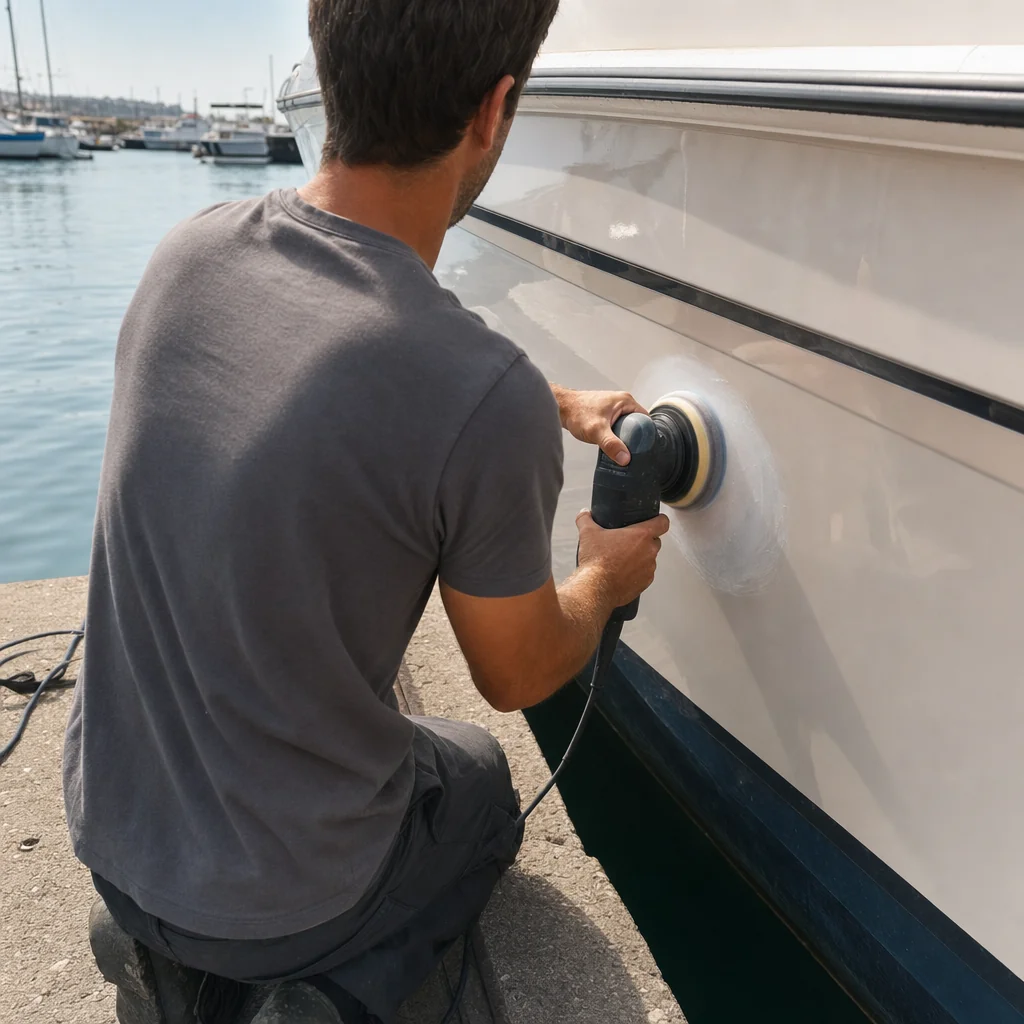
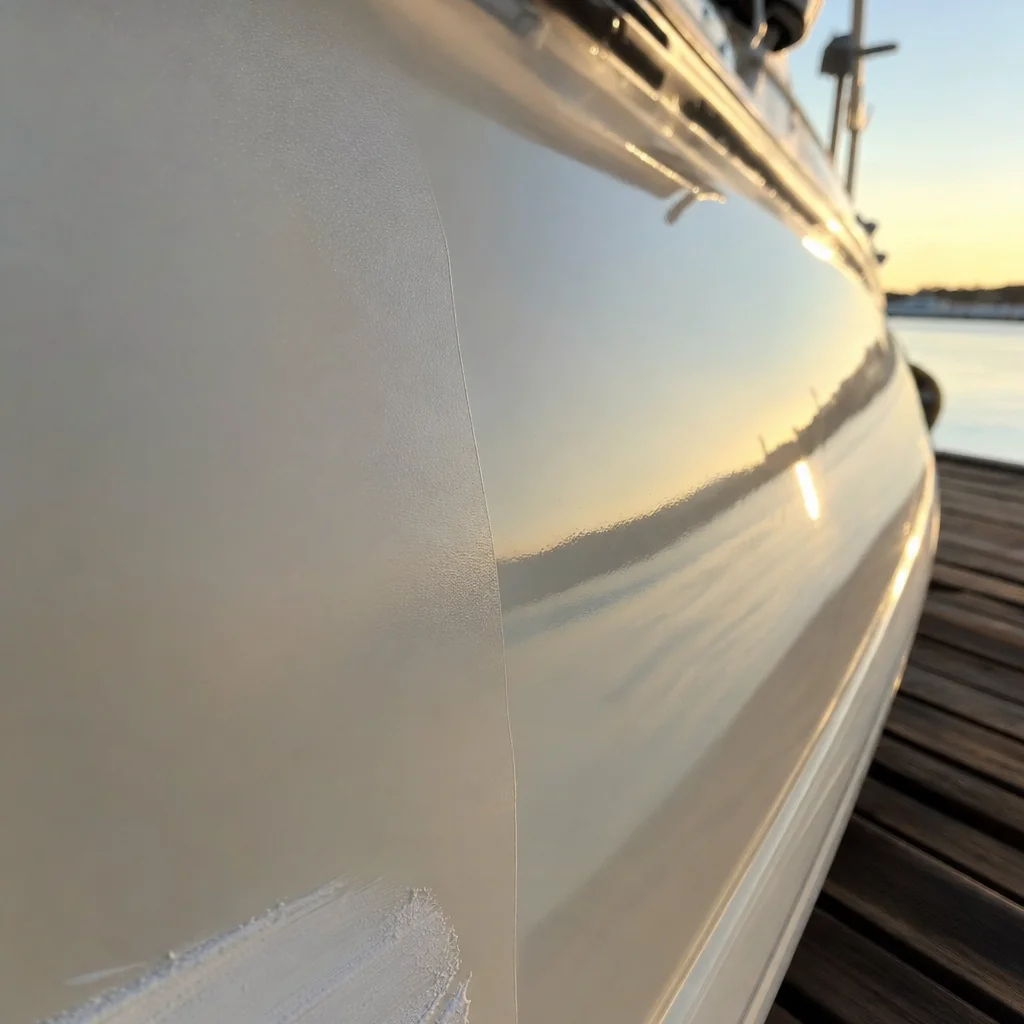
A mobile mechanic brings the tools to you — grinders, wet-dry vacuums, fiberglass cloth and resin, fairing compound, and gelcoat matched to your hull color. The process starts with grinding out the damaged area to clean, dry laminate, then building the repair back up in layers so the finished thickness matches the original hull. Fairing and sanding bring the surface flush, and a color-matched gelcoat coat or marine paint restores the finish. For osmotic blisters, the hull needs to dry out — sometimes for several weeks — before a barrier coat is applied, so the mechanic will map the damage on the first visit and schedule the coating work once moisture readings are acceptable.
Frequently Asked Questions
How long does a typical fiberglass hull repair take?
A single stress crack or small impact repair usually takes two to four hours on-site. Larger jobs involving delamination or multiple blisters can span several visits because each layer of laminate needs time to cure before the next is applied. Osmotic blister treatment takes the longest because the hull must dry to an acceptable moisture level before barrier coating.
Do I need to haul the boat out for hull repair?
For repairs above the waterline or at the waterline when the boat is on a trailer or in a dry slip, haul-out is not necessary. Work below the waterline does require the boat to be out of the water, but a mobile mechanic can coordinate with a local yard for a short haul and do the repair on-site there, which is often faster and cheaper than leaving the boat with the yard.
Can gelcoat be matched to my existing hull color?
Yes, in most cases. Gelcoat is tinted to match using the manufacturer's color code or by eye-matching a sample from a hidden area of the hull. Older hulls that have faded may need the surrounding area lightly buffed after the repair so the new gelcoat blends in rather than standing out as a bright patch.
Are osmotic blisters a serious structural problem?
Early-stage blisters are primarily a cosmetic and moisture issue, but if left untreated for years they can weaken the laminate and eventually compromise hull integrity. Catching them at the small-blister stage, drying the hull, and applying a proper epoxy barrier coat is far less expensive than dealing with deep laminate damage later.
What is the difference between gelcoat repair and a full fiberglass repair?
Gelcoat repair addresses only the outer pigmented layer — it is the right fix for surface scratches, crazing, and minor fading. A fiberglass repair goes deeper, rebuilding the structural laminate with cloth and resin before the gelcoat finish is applied on top. Using gelcoat filler alone on a crack that has penetrated the laminate is a temporary cosmetic patch, not a structural fix.
How much does boat hull repair cost in Long Beach?
Cost depends on the size and depth of the damage, the number of layers of laminate involved, and whether color-matching or barrier coating is needed. Small gelcoat repairs start in the low hundreds of dollars, while extensive blister remediation or collision damage can run into the thousands. A mobile mechanic can give you a firm estimate after inspecting the hull in person.