Marine Toilet Repair Long Beach, CA
Marine toilet repair is one of the most urgent plumbing calls we handle, because a malfunctioning head affects every person aboard and can create sanitation hazards that shut a boat down fast. Whether your manual or electric marine toilet won't flush, leaks at the base, or holds odors that no amount of cleaning removes, the fix usually comes down to worn seals, a clogged macerator, or a failed pump — all problems a mobile mechanic can diagnose and resolve at your slip. Getting the repair done correctly the first time also protects the rest of your on-board plumbing system from backflow and corrosion damage. Learn more about On Board Boat Plumbing.
How Marine Toilets Differ From Household Plumbing
A marine head operates in a salt-air environment, runs on seawater or a pressurized freshwater supply, and must comply with federal no-discharge regulations that require a properly functioning holding tank and Y-valve. The pump mechanism — whether a hand-operated piston or a 12-volt macerator — takes far more abuse than anything in a home bathroom, and the joker valve that prevents backflow degrades within a season or two of regular use. Because every component sits in close quarters with electrical wiring and fuel lines, a DIY repair that goes wrong can escalate quickly. A technician who works specifically on marine systems understands the tolerances, the correct marine-grade parts, and the legal requirements that apply in California coastal waters.
Common Marine Toilet Problems We Fix
Most service calls fall into a handful of repeating failure patterns. Recognizing which one you have helps you describe the problem accurately when you call, and it helps the technician arrive with the right parts on the first visit.
Slow or no flush is almost always a joker valve that has stiffened or inverted, a clogged intake strainer, or a pump piston with worn seals. A toilet that flushes but leaks at the base typically has a failed flange gasket or a cracked bowl fitting. Electric heads that hum but do not move waste point to a jammed or burned-out macerator. Persistent odor even after pumping the holding tank usually means the sanitation hose has become permeated and needs replacement — a job that is part of the broader on-board plumbing system rather than the toilet alone.
- Joker valve replacement — most common single repair
- Pump rebuild or full pump replacement
- Macerator clearing and motor testing
- Intake and discharge hose replacement
- Holding tank vent line inspection and clearing
- Y-valve service and no-discharge valve verification
Signs Your Marine Toilet Needs Professional Attention
Any one of these signs is reason enough to schedule a service call before the problem worsens.
Resistance When Pumping:
Increased handle resistance on a manual head usually means a worn piston seal or a partially blocked discharge line. Forcing it risks cracking the pump body.
Sewage Odor at the Dock:
A smell that lingers after the tank is pumped out points to permeated hose or a leaking deck fitting — neither clears up on its own.
Water on the Sole:
Pooling water around the base of the toilet can come from a cracked bowl, a loose hose clamp, or a failed base gasket, any of which can introduce raw sewage into the bilge.
Electric Head Won't Start:
If the motor is silent, check the breaker first; if power is present but nothing moves, the macerator is likely jammed with debris or the motor has failed.
Backflow Into the Bowl:
Waste or seawater rising back into the bowl when the boat rocks means the joker valve is no longer seating properly and should be replaced immediately.
Holding Tank Overfill Alarm:
A tank that reads full sooner than expected may have a blocked vent line preventing air displacement, which also puts pressure on every hose connection in the system.
Mobile Repair at Your Slip in Long Beach
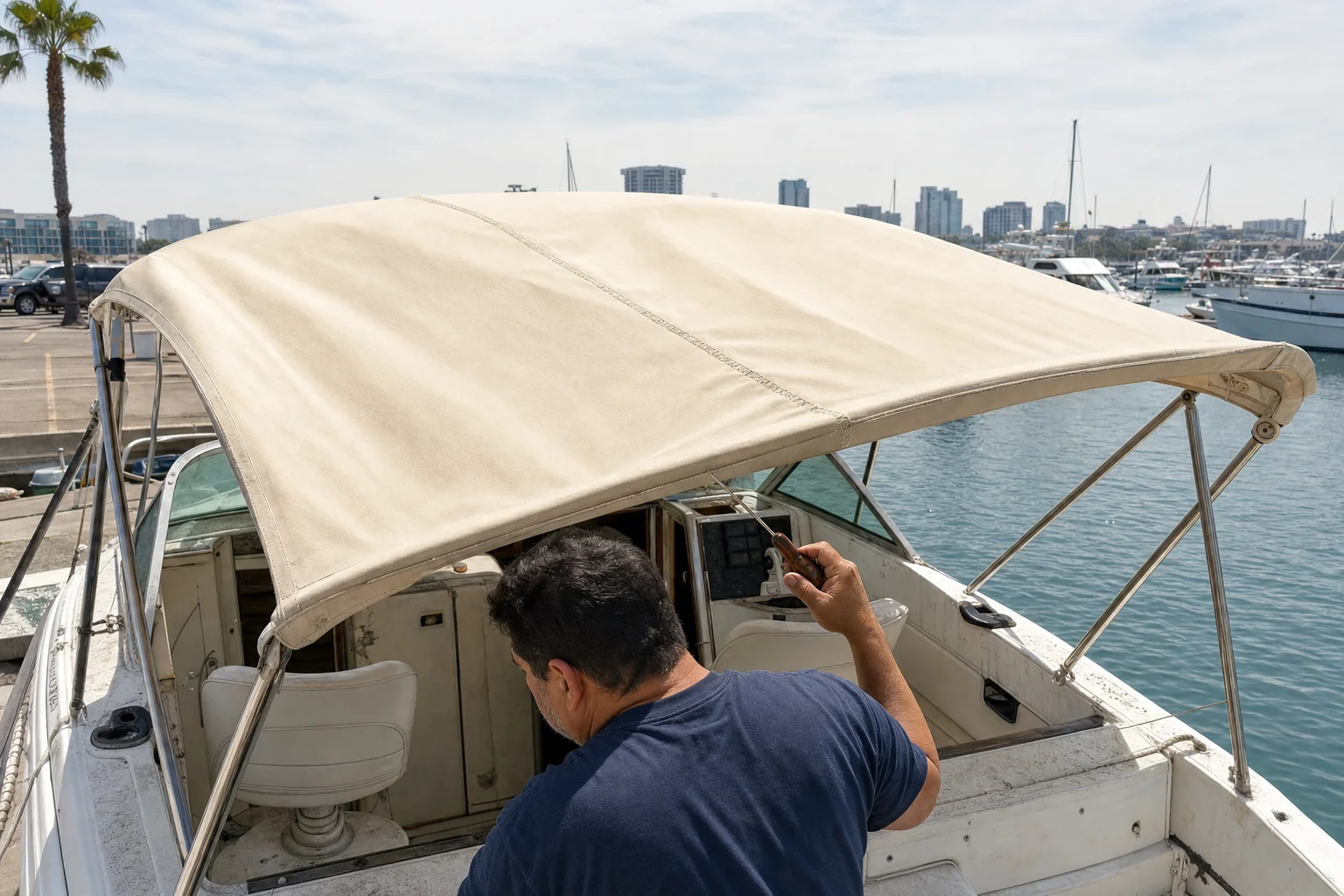
Because we come to your boat rather than requiring you to haul or trailer it, marine toilet repairs in Long Beach get handled with minimal disruption to your schedule. We stock the most common joker valves, pump rebuild kits, and macerator units for popular brands including Jabsco, Raritan, and Dometic, so most repairs are completed in a single visit. After the repair we test the full flush cycle, inspect the discharge hose connections, and confirm the holding tank Y-valve is set to the legal closed position before we leave. If the toilet issue points to a larger problem with your vessel's on-board plumbing — such as a corroded through-hull or a failing vented loop — we document that clearly so you can decide on next steps.
Related Guides
Next: Bilge Pump Replacement
Frequently Asked Questions
How long does a typical marine toilet repair take?
A joker valve swap or pump rebuild usually takes one to two hours at the dock. A full pump replacement or macerator motor swap runs two to three hours depending on access. We give you a time estimate after a quick description of the symptoms before we schedule.
Can I use my boat while waiting for the repair appointment?
If the toilet is leaking waste into the bilge or backflowing into the bowl, we recommend keeping the intake seacock closed and using shore facilities until the repair is done. A slow or stiff pump that still functions can usually wait a few days without causing additional damage.
Do you carry parts for both manual and electric marine toilets?
Yes. Our service vehicle is stocked with rebuild kits and common wear parts for the major manual and electric head brands. If your boat has an older or less common model, we may need to order a specific part, but we will confirm availability before your appointment.
Is marine toilet repair covered under any warranty?
We warranty our labor and any parts we supply. Manufacturer warranties on new pump assemblies or macerator motors pass through to you and we document them at the time of installation.
Why does my marine toilet smell even after the holding tank is pumped?
Sanitation hose is porous and absorbs odor compounds over time — no amount of treatment fully eliminates this once the hose is saturated. Replacing the discharge and vent hose is the only permanent fix, and it is a straightforward part of a marine plumbing service call.
How does marine toilet repair connect to the rest of my boat's plumbing?
The head system shares through-hulls, hose runs, and sometimes a pressurized water supply with the rest of your vessel's on-board plumbing. A problem that starts at the toilet can stress hose clamps and fittings elsewhere in the system, which is why we inspect the connected lines as part of every toilet repair. You can learn more about the full scope of on-board plumbing services we offer at our main plumbing page.