Marine Electronics Installation Long Beach, CA
Marine electronics installation in Long Beach, CA covers everything from chartplotters and VHF radios to depth finders, AIS transponders, and stereo systems — all wired cleanly and calibrated to work together on the water. A mobile boat mechanic comes to your slip or storage yard, so you skip the haul-out and the marina service queue. Getting the installation done right the first time protects your investment and keeps you safe offshore. Learn more about Marine Electrical Service.
What Marine Electronics Installation Actually Involves
Installing marine electronics is more than bolting a unit to a helm panel. Every device needs a clean, fused power feed sized for its draw, a proper ground that won't corrode in a saltwater environment, and — for networked systems — NMEA 2000 or NMEA 0183 wiring that lets your chartplotter talk to your depth sounder, autopilot, and engine gauges. Antenna placement matters too: a VHF antenna mounted too close to a radar dome loses range, and a GPS antenna buried under a fiberglass hardtop won't hold a fix. A qualified marine technician plans the full system before drilling a single hole.
Common Electronics We Install on Long Beach Boats
Long Beach boaters run everything from day-fishing skiffs to offshore sportfishers and liveaboards, so the electronics requests vary widely. The most common installs include chartplotters and multifunction displays, VHF and SSB radios, AIS Class B transponders, radar systems, autopilots, depth and fish finders, engine monitoring systems, marine stereos and speakers, underwater LED lighting, and shore-power management panels.
Networked builds — where a single chartplotter displays engine data, AIS targets, radar overlay, and sonar at the same time — require careful backbone wiring and device configuration. We map out the network before installation begins, confirm compatibility between brands, and test every data feed before we pack up. If you are upgrading from older gear, we also remove legacy wiring that adds resistance and fire risk.
- Chartplotters and multifunction displays (Garmin, Simrad, Lowrance, Raymarine)
- VHF radios with DSC and AIS integration
- Radar — open array and radome
- Autopilot systems including drive unit and course computer
- Depth sounders and fish finders with transducer installation
- Marine stereos, amplifiers, and marine-rated speakers
- AIS Class B transponders
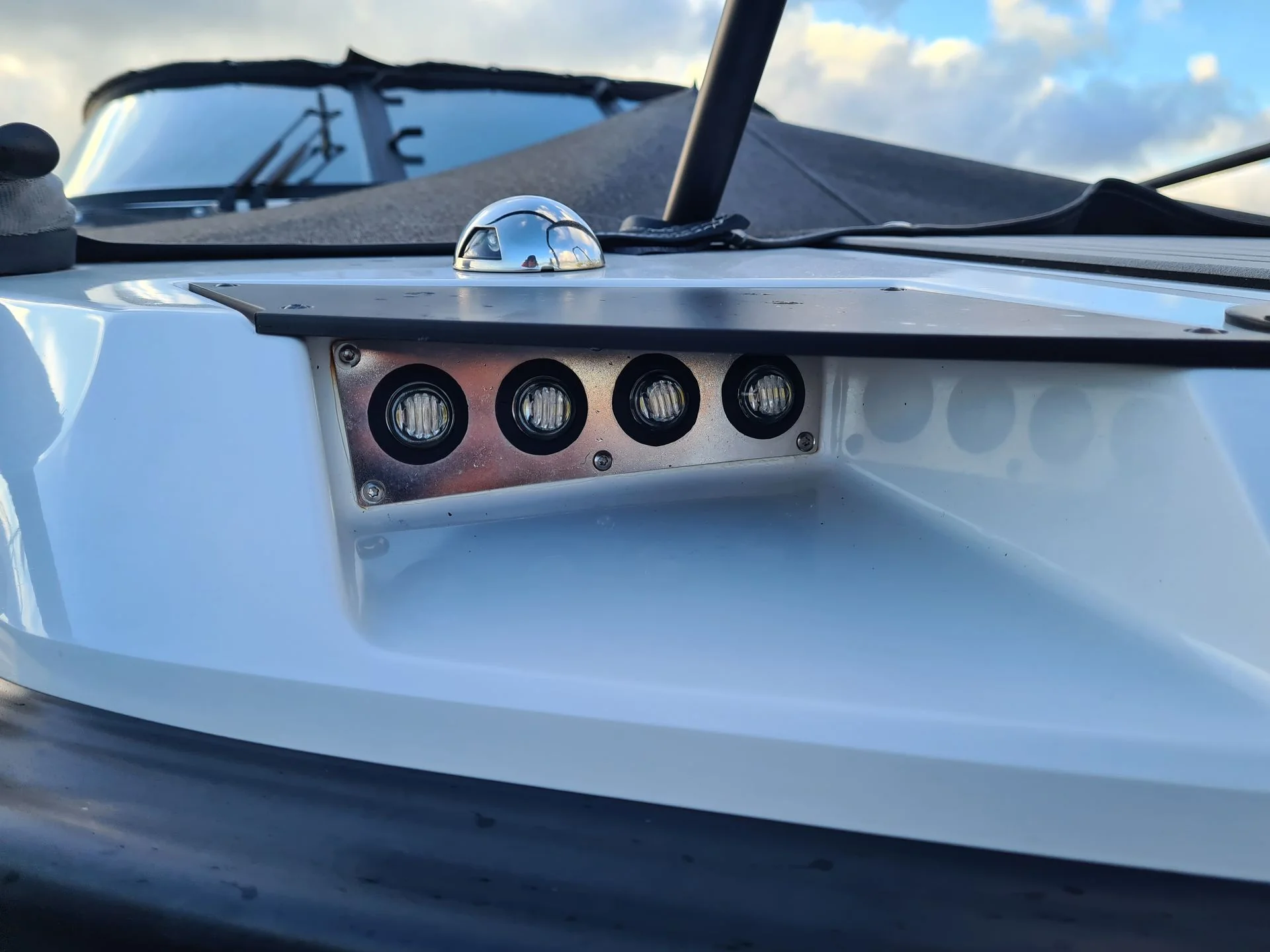
- Underwater LED accent and navigation lighting
Factors That Affect Your Installation Cost
Every boat and every electronics package is different — here are the main variables that shape what a job will cost.
Number of devices:
A single chartplotter swap takes far less time than a full helm rebuild with radar, autopilot, and a new NMEA 2000 backbone.
Wiring condition:
Older boats often have corroded or undersized wiring that must be replaced before new electronics can be safely connected.
Helm access:
Tight helm consoles, fiberglass dash panels, and enclosed flybridge stations add labor time for routing cables cleanly.
Transducer type:
Through-hull transducers require drilling and sealing, which adds time and materials compared to a transom-mount or in-hull install.
Network complexity:
Integrating multiple brands over NMEA 2000 or Ethernet requires configuration time beyond the physical installation.
Antenna runs:
Long cable runs to a mast-top VHF antenna or a radar arch add material cost and require careful routing to avoid interference.
Why a Mobile Technician Makes Sense in Long Beach
Long Beach has dozens of marinas, anchorages, and dry-storage yards spread from Alamitos Bay to the LA River channel. Trailering a boat to a shop or waiting weeks for a marina service slot costs you time on the water. A mobile marine electrician brings the tools, wire, connectors, and test equipment to your location — whether that is a slip at Shoreline Marina, a rack at a dry-storage facility, or your driveway. Work gets done on your schedule, and you can watch the installation and ask questions as it happens. For anything involving your boat's electrical system, that kind of hands-on oversight is worth a lot.
Related Guides
Previous: Marine Battery Replacement | Next: boat navigation light repair
Frequently Asked Questions
How long does a typical marine electronics installation take?
A single device swap — like replacing an old chartplotter with a new one on the same mount — usually takes two to four hours. A full helm build with chartplotter, radar, autopilot, and a new NMEA 2000 backbone can take one to two full days. We give you a time estimate after reviewing your boat and your parts list.
Do I need to supply the electronics, or can you source them?
Either works. Many customers purchase their own units from West Marine, an online retailer, or a manufacturer's dealer and then call us for the installation. We can also source equipment for you, which is helpful when you want guidance on compatibility before you buy.
Will my new chartplotter work with my existing transducer?
It depends on the connector type and the sonar frequency the transducer supports. Some transducers are compatible with adapters; others need to be replaced to take advantage of newer CHIRP sonar technology. We check compatibility before installation so there are no surprises.
Is a through-hull transducer better than a transom mount?
Through-hull transducers generally give cleaner sonar readings at higher speeds because they stay in contact with undisturbed water. Transom mounts are easier to install and work well on most recreational boats at normal cruising speeds. We will recommend the right option based on your hull type and how you use the boat.
What is NMEA 2000 and do I need it?
NMEA 2000 is a plug-and-play networking standard that lets compatible marine electronics share data over a single backbone cable. If you want your chartplotter to display engine data, GPS speed, depth, and AIS targets on one screen, you need a NMEA 2000 network. Older boats can be retrofitted with a backbone during an electronics upgrade.
How does marine electronics installation connect to broader marine electrical service?
Electronics installation is one part of a complete marine electrical system — the same system that handles your bilge pumps, navigation lights, shore power, and battery banks. Problems in one area affect the others, which is why we always check the overall electrical health of the boat before adding new loads. You can learn more on our marine electrical services page.