Outboard Fuel System Repair Long Beach, CA
Outboard fuel system repair is one of the most common reasons boats sit idle in Long Beach marinas instead of on the water. A clogged carburetor, failing fuel pump, or deteriorated fuel line can starve your engine of the fuel it needs and leave you stranded. A mobile boat mechanic can diagnose and fix most fuel system problems dockside, so you skip the haul-out and get back on the water faster. Learn more about Outboard Repair.
Why Outboard Fuel Systems Fail in Southern California
Ethanol-blended fuel is the leading culprit behind fuel system problems in Long Beach and the surrounding coastal areas. Ethanol absorbs moisture from the humid marine environment, causing phase separation in the tank and accelerating corrosion in carburetors, fuel pumps, and metal fittings. Add in the heat that builds up in engine compartments during summer, and rubber fuel lines and primer bulbs degrade faster than most owners expect. Boats that sit between fishing seasons are especially vulnerable because stale fuel leaves varnish deposits that clog jets and passages.
Common Outboard Fuel System Problems
These are the issues a mobile mechanic looks for first when an outboard runs rough, won't start, or dies under load.
Clogged Carburetor:
Varnish and debris from stale fuel block the main jet and idle circuit, causing hard starts, rough idle, and stumbling at wide-open throttle.
Weak or Failed Fuel Pump:
A diaphragm-style fuel pump loses its ability to pull fuel from the tank as the diaphragm cracks with age, leading to lean conditions and engine cutout at higher RPM.
Deteriorated Fuel Lines:
Ethanol softens and swells older rubber hoses, causing cracks, leaks, and fuel restriction that are a safety hazard as well as a performance problem.
Collapsed Primer Bulb:
A primer bulb that won't stay firm or collapses while running signals a check valve failure or a crack in the bulb itself, starving the engine of fuel.
Water or Phase-Separated Fuel:
Ethanol that has absorbed enough moisture separates into a water-alcohol layer at the bottom of the tank, which gets drawn into the engine and causes misfires or no-starts.
Dirty Fuel Filter:
An inline or bowl-style fuel filter loaded with sediment restricts flow enough to cause power loss under load even when the rest of the system is in good shape.
What a Fuel System Repair Service Includes
A thorough fuel system repair starts with a pressure and flow test to confirm whether the problem is upstream or downstream of the fuel pump. From there, the mechanic inspects the tank vent, fuel lines, primer bulb, and filter before moving to the carburetor or fuel injection components. On carbureted outboards, a full carburetor rebuild — disassembly, ultrasonic or solvent cleaning, new gaskets and needle valves, and careful reassembly — resolves the majority of fuel delivery complaints. EFI outboards require fuel pressure testing, injector flow checks, and sometimes a scan tool to read fault codes before parts are replaced.
After repairs are complete, the engine is run under load to confirm proper fuel delivery at idle, mid-range, and wide-open throttle. The mechanic also checks for any fuel odor or weeping at fittings, because even a small leak is a fire risk on a boat. Most jobs also include a recommendation on whether the existing fuel in the tank is worth keeping or should be pumped out and replaced with fresh non-ethanol fuel if available at your marina.
- Fuel pressure and flow testing
- Fuel line and primer bulb inspection and replacement
- Carburetor cleaning or full rebuild
- Fuel filter replacement
- EFI injector testing and fault code diagnosis
- Post-repair load test and leak check
Mobile Fuel System Repair at Your Dock or Slip
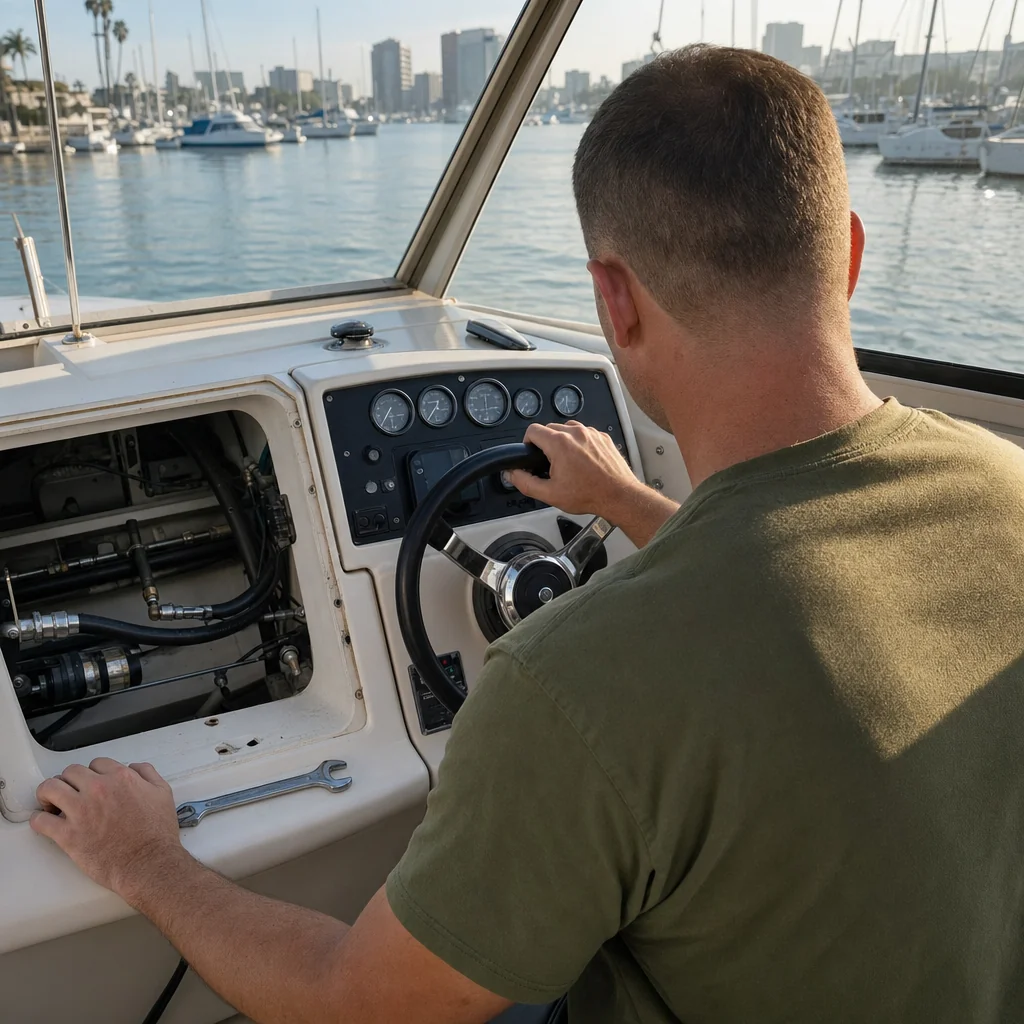
Having a mechanic come to your slip in Long Beach means the engine never leaves the boat and you avoid marina storage fees and tow charges. A fully equipped mobile mechanic carries the most common carburetor rebuild kits, fuel pumps, and line fittings for popular outboard brands, so many repairs are completed in a single visit. If your outboard is on a trailer, service can be done at your home, storage yard, or launch ramp. For anything beyond a straightforward fuel system repair, the mechanic can advise whether a shop visit is genuinely necessary or whether the job can still be handled on-site. You can learn more about the full range of services available on the outboard repair page.
Related Guides
Previous: Outboard Tune Up | Next: Tilt And Trim Repair
Frequently Asked Questions
How do I know if my outboard has a fuel system problem versus an ignition problem?
Fuel problems typically show up as hard starts when warm, stumbling under load, or an engine that runs fine at idle but cuts out at higher RPM. Ignition issues more often cause a complete no-spark no-start or misfires that don't change with throttle position. A mechanic can confirm which system is at fault with a quick spark test and fuel pressure check before any parts are ordered.
Can I use ethanol-free fuel to prevent fuel system problems?
Yes, non-ethanol fuel is the best choice for outboards and is available at several marinas in the Long Beach area. It resists phase separation, is gentler on rubber components, and stores much longer without going stale. If you can only access E10 fuel, using a quality marine fuel stabilizer and keeping the tank full when storing the boat reduces moisture absorption significantly.
How long does a carburetor rebuild take on a typical outboard?
A single-carburetor rebuild on a smaller outboard usually takes one to two hours on-site. Multi-carb setups on older inline engines can take three to four hours depending on access and the condition of the carburetors. Most mobile mechanics carry common rebuild kits in stock, so parts rarely delay the job.
Is it worth rebuilding an old carburetor or should I just replace it?
Rebuilding is almost always the better value unless the carburetor body itself is cracked or corroded through. A rebuild kit costs a fraction of a new or aftermarket carburetor, and a properly rebuilt original carb performs as well as a replacement. Your mechanic can inspect the body during disassembly and give you an honest recommendation before proceeding.
My outboard starts fine but dies after a few minutes. Is that a fuel system issue?
That symptom — sometimes called running out of fuel — is a classic sign of a partially blocked fuel system. Common causes include a clogged fuel filter, a failing fuel pump diaphragm, or a tank vent that is not allowing air in as fuel is drawn out. A mechanic can usually pinpoint the cause quickly by squeezing the primer bulb while the engine is running to see if it restores power.
Do you work on fuel-injected outboards as well as carbureted ones?
Yes, modern EFI outboards are fully serviceable on-site with the right diagnostic tools. Fuel injector testing, high-pressure fuel pump replacement, and fuel rail inspection are all jobs that can be done at your slip or storage location. Fault codes are read with a scan tool to avoid replacing parts that are not actually at fault.